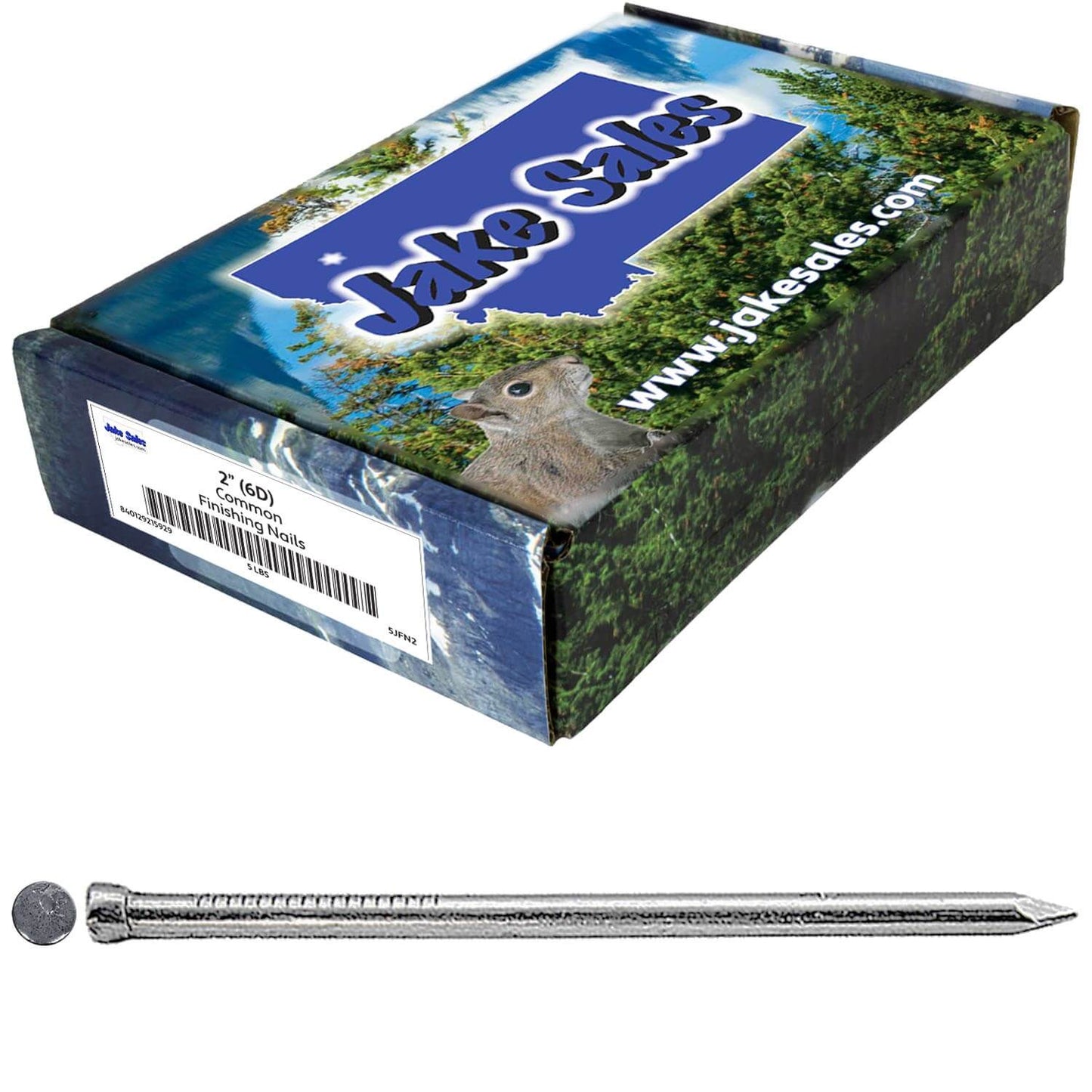
Finish Nails - Non-Structural Nails for Trim, Molding, and Paneling
1-1/2" 1 POUND 560 Nails
GS1: 840129215882
Delayed Delivery Item
Couldn't load pickup availability
What is a finish nail used for?
Finish nails are used for trim carpentry: installing crown molding, baseboards, door and window casings, paneling, and decorative woodwork. The small head is set below the wood surface and filled with putty for an invisible finish.
What is the difference between a finish nail and a brad nail?
Finish nails (15 or 16 gauge) are slightly thicker and stronger than brad nails (18 gauge). Use finish nails for heavier trim like baseboards and crown molding. Use brad nails for delicate trim and thin moldings.
What size finish nails do I need for baseboards?
For standard 3/4 inch thick baseboards, use 6d (2 inch) or 8d (2-1/2 inch) finish nails to reach through the baseboard and into the wall stud. Angle the nail slightly for better holding power.
How do I set a finish nail below the surface?
After driving the nail nearly flush, place a nail set (a pointed metal tool) on the nail head and strike it with a hammer. A single firm strike drives the head 1/16 to 1/8 inch below the surface, creating a small hole to fill with putty.
Can finish nails be used in a nail gun?
Yes. Finish nailers (15 or 16 gauge) drive finish nails from a magazine. They are faster than hand nailing and provide more consistent depth. Match the nail gauge to your specific finish nailer model.
Are finish nails structural?
No. Finish nails are non-structural fasteners designed only to hold trim pieces in place. They are not rated for load-bearing connections, which require common nails, structural screws, or engineered connectors.
What length finish nails should I use for crown molding?
For standard 3/4 inch thick crown molding, use 6d (2 inch) or 8d (2-1/2 inch) finish nails. Drive into wall studs and ceiling joists behind the molding, not just into drywall, for a secure hold.
What is the difference between 15-gauge and 16-gauge finish nails?
15-gauge nails are slightly thicker with greater holding power. They use an angled magazine nailer. 16-gauge nails are more common and use a straight magazine nailer. Both are suitable for baseboard and molding installation.
Can I use finish nails for outdoor trim?
Finish nails are typically uncoated and will rust if used outdoors. For exterior trim, use stainless steel or hot-dip galvanized finish nails specifically rated for outdoor use and compatible with the trim material.
How do I prevent finish nails from splitting thin trim?
Use the smallest nail that provides adequate holding power, pre-drill a pilot hole in fragile or very dry trim pieces, and avoid nailing within 1 inch of the end of a trim board where splitting is most likely.
Finish nails are slender, small-headed nails designed for trim carpentry and finishing work where the nail head needs to be hidden. Common applications include installing crown molding, baseboards, door and window casings, paneling, wainscoting, and furniture face frames. Available in 4d (1-1/2 inch), 6d (2 inch), 8d (2-1/2 inch), 10d (3 inch), and 16d (3-1/2 inch) sizes.
Finish Nails used for "finishing" projects and are non-structural in nature. Common uses for a finish nail are installing crown molding, baseboards, paneling and other projects
Finish Nails used for "finishing" projects and are non-structural in nature
Common uses for a finish nail are installing crown molding, baseboards, paneling and other projects
Usually installed by placing head of nail below surface of trim and then filling hole with putty
Bright Finish finish nails are not recommended for exterior applications
Small size of nail shaft helps prevent splitting wood
Installation Instructions - Available Here
| Size - Product Link | Package Size | ~ Nail Count | Interior/Exterior |
|---|---|---|---|
| 1-1/2" (4d) | 1 Pound | 560 | Interior Only |
| 1-1/2" (4d) | 5 Pounds | 2785 | Interior Only |
| 1-1/2" (4d) | Full Box | 19500 | Interior Only |
| 2" (6d) | 1 Pound | 210 | Interior Only |
| 2" (6d) | 5 Pounds | 1080 | Interior Only |
| 2" (6d) | Full Box | 8720 | Interior Only |
| 2-1/2" (8d) | 1 Pound | 160 | Interior Only |
| 2-1/2" (8d) | 5 Pounds | 845 | Interior Only |
| 2-1/2" (8d) | Full Box | 5980 | Interior Only |
| 3" (10d) | 1 Pound | 130 | Interior Only |
| 3" (10d) | 5 Pounds | 641 | Interior Only |
| 3" (10d) | Full Box | 6410 | Interior Only |
| 3-1/2" (16d) | 1 Pound | 75 | Interior Only |
| 3-1/2" (16d) | 5 Pounds | 410 | Interior Only |
| 3-1/2" (16d) | Full Box | 3725 | Interior Only |