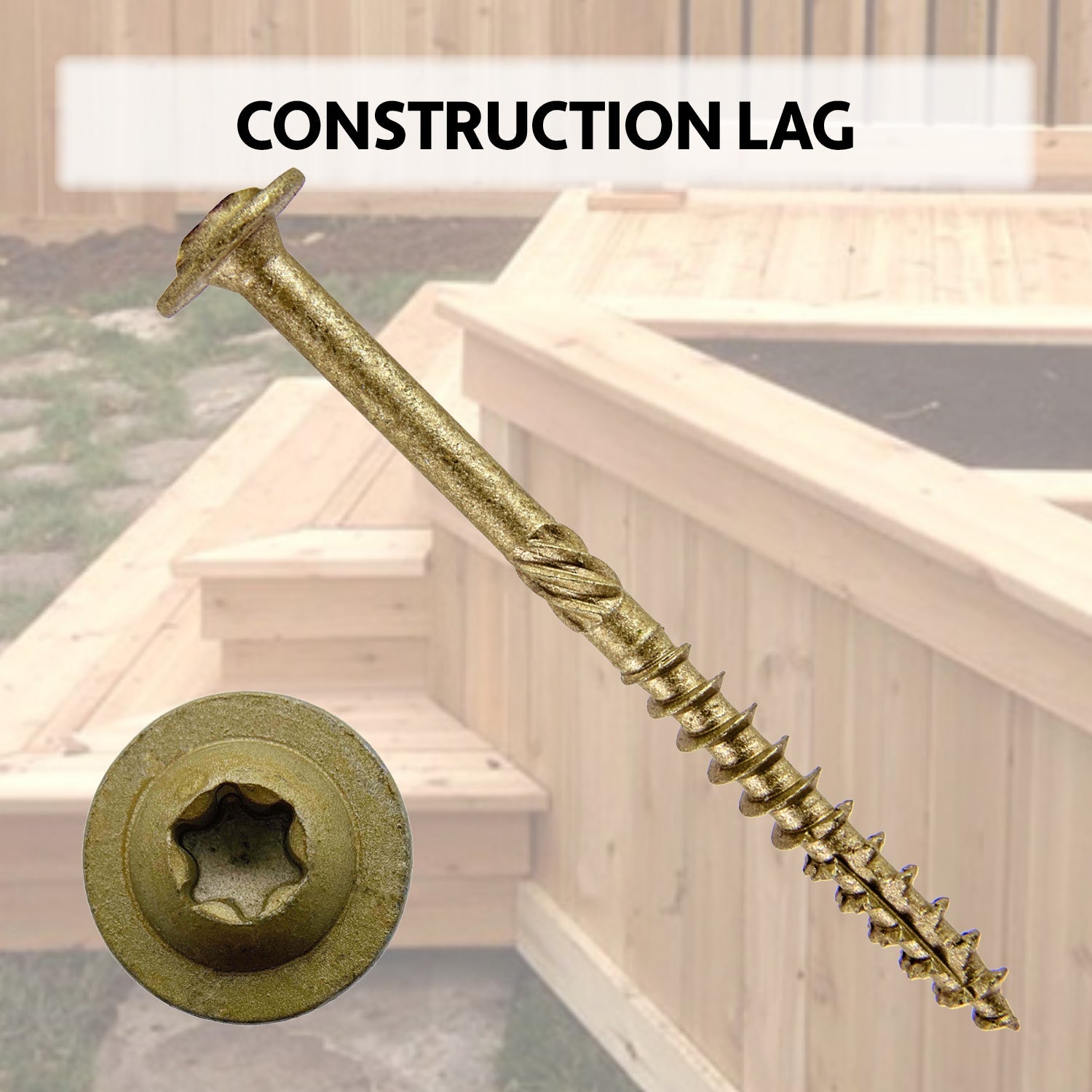
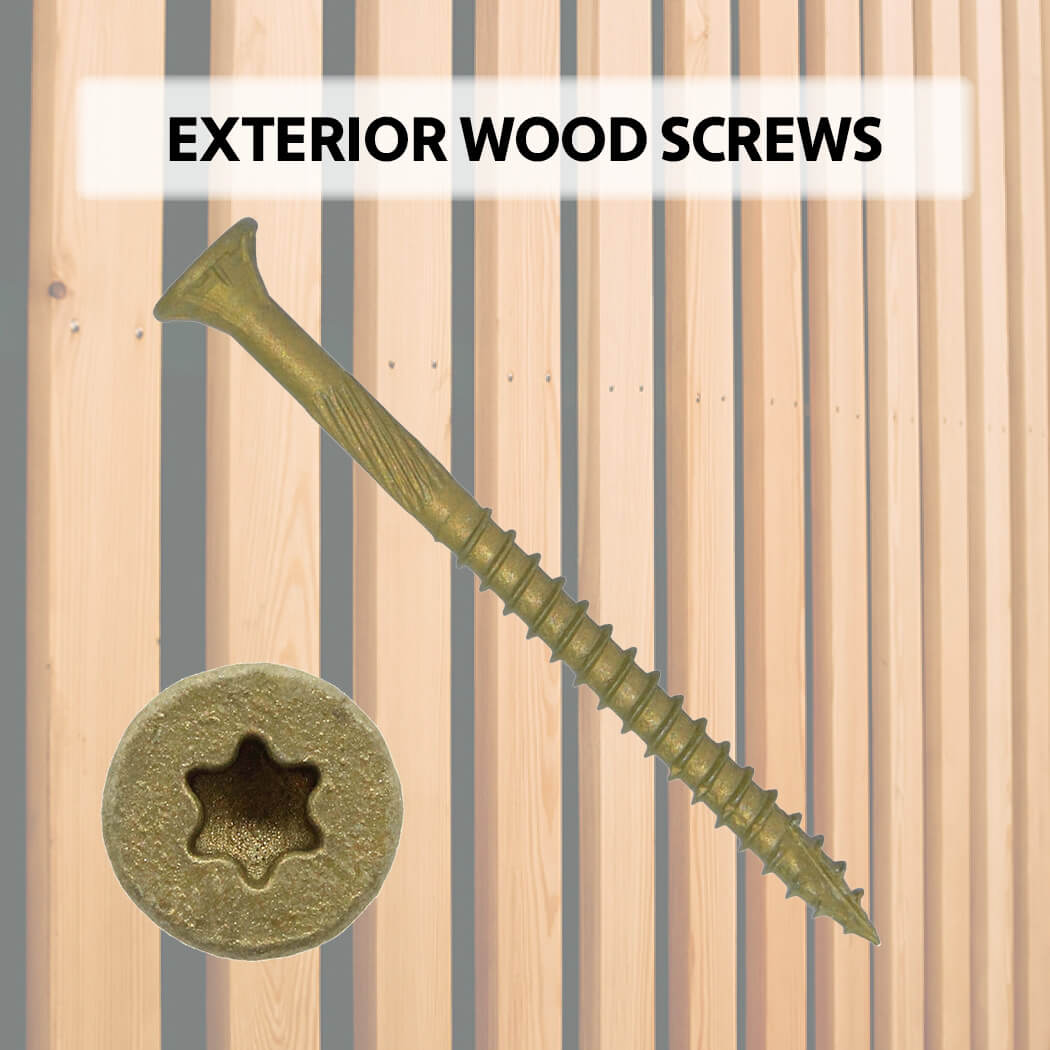
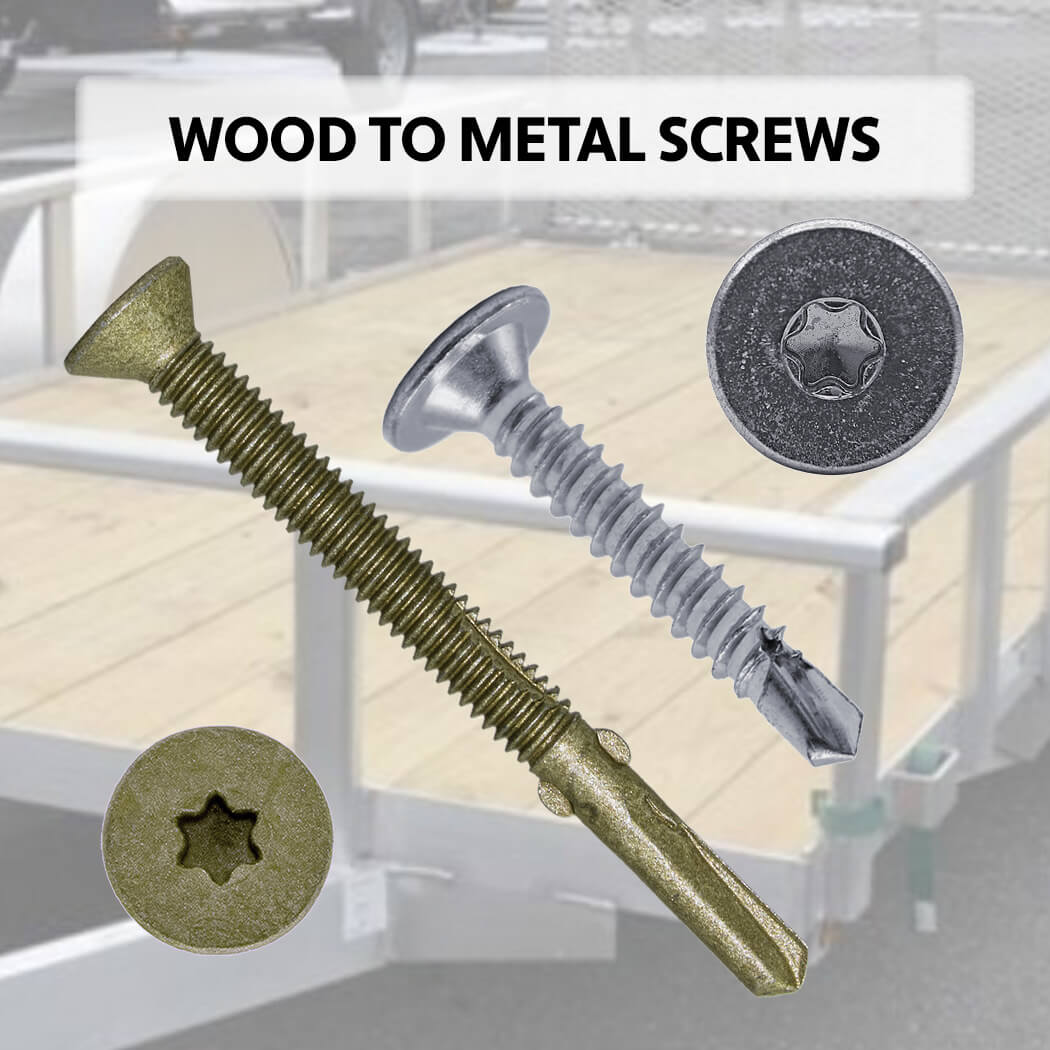
Fastening wood to metal requires the right screw and installation method to create a secure, long-lasting hold.
Wood attached to a metal frame, stud, panel, or other piece warrants specialized fasteners for the connections. The fastener needs to pass through the wood and securely engage the metal without damaging either material or compromising the connection, and standard wood screws are not always the best choice for wood-to-metal roofing, decking, or framing jobs.
Best Screws to Join Wood to Metal
The best screw for fastening wood to metal depends on the thickness and type of metal, thickness of the wood, and application. In general, use a screw that is specifically designed to fasten wood to metal rather than a standard wood screw. It's also important to use a screw that is rated for the load it will carry, especially in structural applications.
Self-Drilling Screws

Self-Tapping Screws
Self-tapping screws have a sharp point that easily grips material and deep, notched threads that allow the screw to create its own mating threads as it's driven—that's the key detail. Self-tapping screws may still require a predrilled pilot hole, especially in dense, brittle, or hard materials, but they help achieve fast and clean starts.
Reamer Tek Screws

How to Fasten Wood to Metal: Step by Step
When you have the right fastener for the job, fastening wood to metal becomes a straightforward task.
- Choose the correct screw based on material type and thickness, expected exposure, and required holding strength of the connection.
- Position the wood exactly where it needs to be attached and make sure it is properly supported.
- Predrill if the screw cannot penetrate the material on its own.
- Drive the screw straight, perpendicular to the surface.
- Stop at the proper depth to avoid overtightening the screw.
Why Fine-Thread Screws Are Often Used in Metal

When to Predrill Wood-to-Metal Connections
If you are using a self-drilling wood-to-metal screw with a drill-point tip, you likely do not need to drill a separate pilot hole. The drill point is designed to penetrate the metal during installation, assuming the screw is actually rated for the thickness and type of metal you are fastening into.
You may need to predrill wood-to-metal connections if:
- The metal is too thick for the screw's drill-point tip, or the screw does not have a drill-point tip.
- The metal is harder than the screw is designed to penetrate.
- A clearance hole in the wood is needed, and you're not using a Reamer Tek screw.
- You want to ensure precise screw placement.
Compare Screws for Different Wood-to-Metal Applications
| Application | Recommended Fastener Type | Fastener Example |
|---|---|---|
| Wood decking to steel frame | Self-drilling or Reamer Tek wood-to-metal screw | #10x1-5/8" Reamer Tek Screws |
| Wood boards to metal studs | Self-drilling wood-to-metal screw | #10x1-1/4" Self-Drilling Wafer Head Screws |
| Metal roofing to wood studs | Metal-to-wood roofing screw | #10x1-1/2" Metal Roofing Screws |
| Drywall to metal studs | Self-drilling drywall screw rated for metal | #6x1-1/4" Drywall Screw |
Exact fastener requirements will vary depending on material type and thickness. Consult manufacturer specifications for the most accurate hardware recommendations.
Fasten Wood to Metal with the Right Screw
Fastening wood to metal is straightforward when the screw is correctly matched to the materials and application. For decking and framing, self-drilling and Reamer Tek screws can provide a convenient way to attach boards directly to steel or aluminum. For roofing, specialized metal-to-wood screws can provide both secure fastening and weather-resistant sealing. You can find self-drilling, Reamer Tek, metal roofing, and other specialized metal-to-wood or general construction screws on JakeSales.com.
Before installing fasteners, check that the screw's length, drill-point capacity, and corrosion resistance matches the application requirements. If the connection is structural or load-bearing, always use fasteners that meet the project's engineering and building code requirements.
FAQ
What's the best screw for fastening wood to metal?
The best screw depends on the application, but self-drilling wood-to-metal screws and Reamer Tek screws are common choices for attaching wood directly to steel or aluminum. Metal roofing applications usually require specialized metal-to-wood roofing screws with sealing washers.
Can you screw directly into metal?
Yes. Self-drilling screws are designed to penetrate and engage metal, but it's important to use a screw rated for the metal thickness.
Do you need to predrill wood before screwing into metal?
Not always. A self-drilling wood-to-metal screw can often pass through wood and drill into metal in one operation. Predrilling may still be useful for particularly thick or hard woods, precise placement, or non-self-drilling screws.
Can you attach wood to metal studs?
Yes. Wood can be attached to metal studs using screws designed to penetrate and engage the particular gauge of steel being used. For structural or load-bearing applications, follow the project's specified fastening requirements.