There are many unique types of wood screws designed for specific applications. Learn what sets them apart and how to choose the right wood screw for framing, decking, hardwoods, general construction, and carpentry projects.
Choosing the right wood screw is about more than finding the correct length. The type of wood used, project conditions, required holding power, and installation method all affect which screw will work best in a project. Whether you're building a deck, installing siding, fastening trim, or assembling a wood frame, selecting the right wood screw can make installation easier and help create a stronger, longer-lasting connection.
What is a Wood Screw?
A wood screw is a fastener designed primarily for joining pieces of wood or fastening other materials to wood. Wood screws have threads and points designed to cut and hold wood fibers in ways that metal screws and other fasteners cannot. Wood screws come in a variety of lengths, diameters, materials, coatings, head styles, thread configurations, and drive types. The right combination of features depends on the application.
What Makes a Wood Screw Different from Other Fasteners?
Wood screws are designed to provide strong holding power in wood. Their sharp points and threads penetrate the wood and create mechanical engagement with the surrounding fibers that holds wood pieces in place.
Wood screws generally have:
- Sharp points for starting quickly in wood
- Threads designed to grip wood fibers
- A wide variety of thread configurations for different applications and wood types
- Head styles designed for flush or surface installation
- Options for interior and exterior use
- Materials and coatings suited for different levels of corrosion resistance
Features of a Wood Screw
Several features determine how a wood screw installs and performs. Understanding these features makes it easier to choose the right screw for your project.
Screw Size: Length and Diameter
Screw size is one of the most important considerations when choosing a fastener. The screw needs to be long enough to grasp the material and thick enough to withstand stress.
Screw Length: The screw should be long enough to create adequate thread engagement without protruding through the back of the material. For many wood-to-wood applications, the screw should be 1.5 to 2 times longer than the top material thickness. However, correct length depends on the specific application and wood type as well.
Screw Diameter: Larger diameter screws generally provide greater strength, but using an unnecessarily large screw can increase the risk of splitting, especially in hardwood or narrow pieces of wood.
Thread Type and Point
Screw Thread: Threads provide the holding power in a connection. The two main types of thread patterns are coarse and fine. Coarse threads are commonly used in softer materials, while fine threads are best for hard woods and metals. Most modern wood screws are self-tapping, meaning they form their own mating threads during driving.
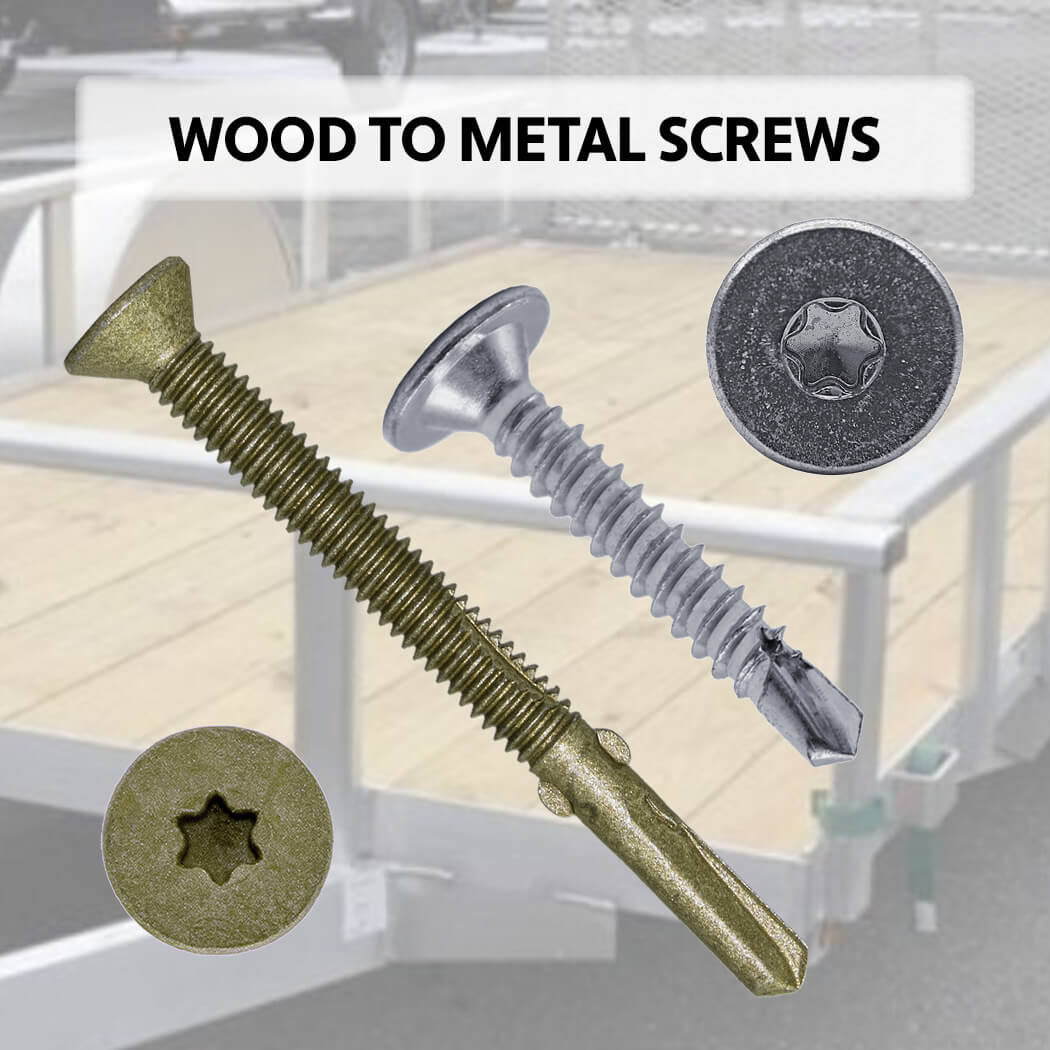
Screw Point: The point affects how a screw penetrates wood. Sharp, notched points grip material quickly and allow for fast, easy installation. Self-drilling screws typically don't need a pilot hole and are common in wood-to-metal connections.
Screw Head and Drive Type
Screw Head: The screw head determines how it sits after installation. Flat or countersunk heads sit flush with the surface of the wood, while non-countersunk heads such as pan heads, wafer heads, or hex heads sit on top of the material.
Drive Type: Common drive types include Phillips, square, Torx, hex, and slotted. Torx-drive screws are popular for general construction because they offer high bit engagement and reduce the risk of cam-out while driving.
Material and Coating
The screw material and coating must match the environment to protect against rust and corrosion. For interior projects, standard steel fasteners are often adequate. For exterior projects, use a screw with enough corrosion resistance for the environment.
Common corrosion-resistant materials and coatings:
- Hot-dip galvanized steel: Standard corrosion resistance for many exterior applications
- Stainless steel: Extreme corrosion protection for demanding environments
- You may need stainless steel screws if you are working in continually wet, salty, or humid environments.
- Ceramic coatings: Enhanced corrosion resistance, lubrication, and durability in one finish
Different Types of Wood Screws

General-Purpose Wood Screws
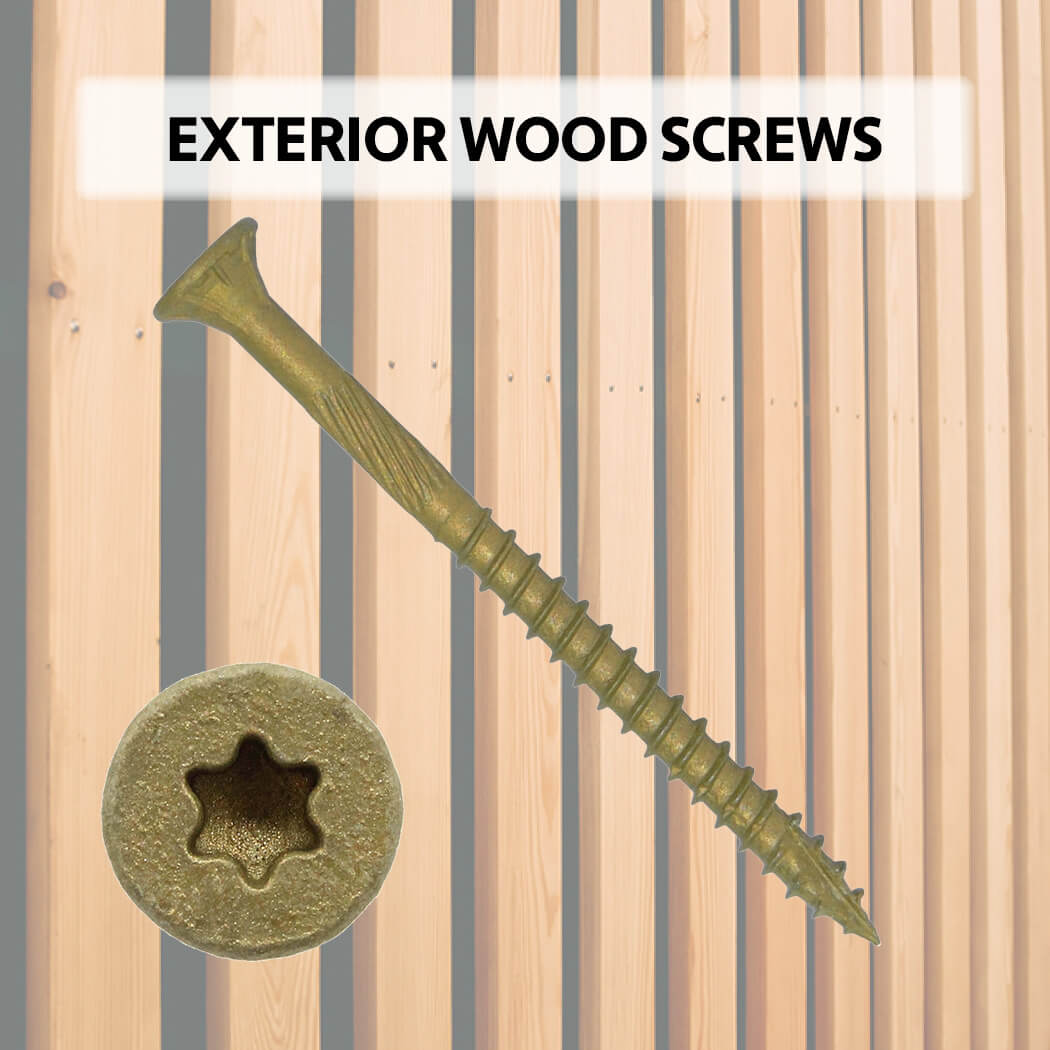
General-purpose wood screws are useful for everyday woodworking, repairs, furniture assembly, and general construction. They typically have flat heads and coarse threads, but they are available in many lengths, diameters, and coatings, making them a versatile choice for a wide range of projects.

Construction Lag Screws
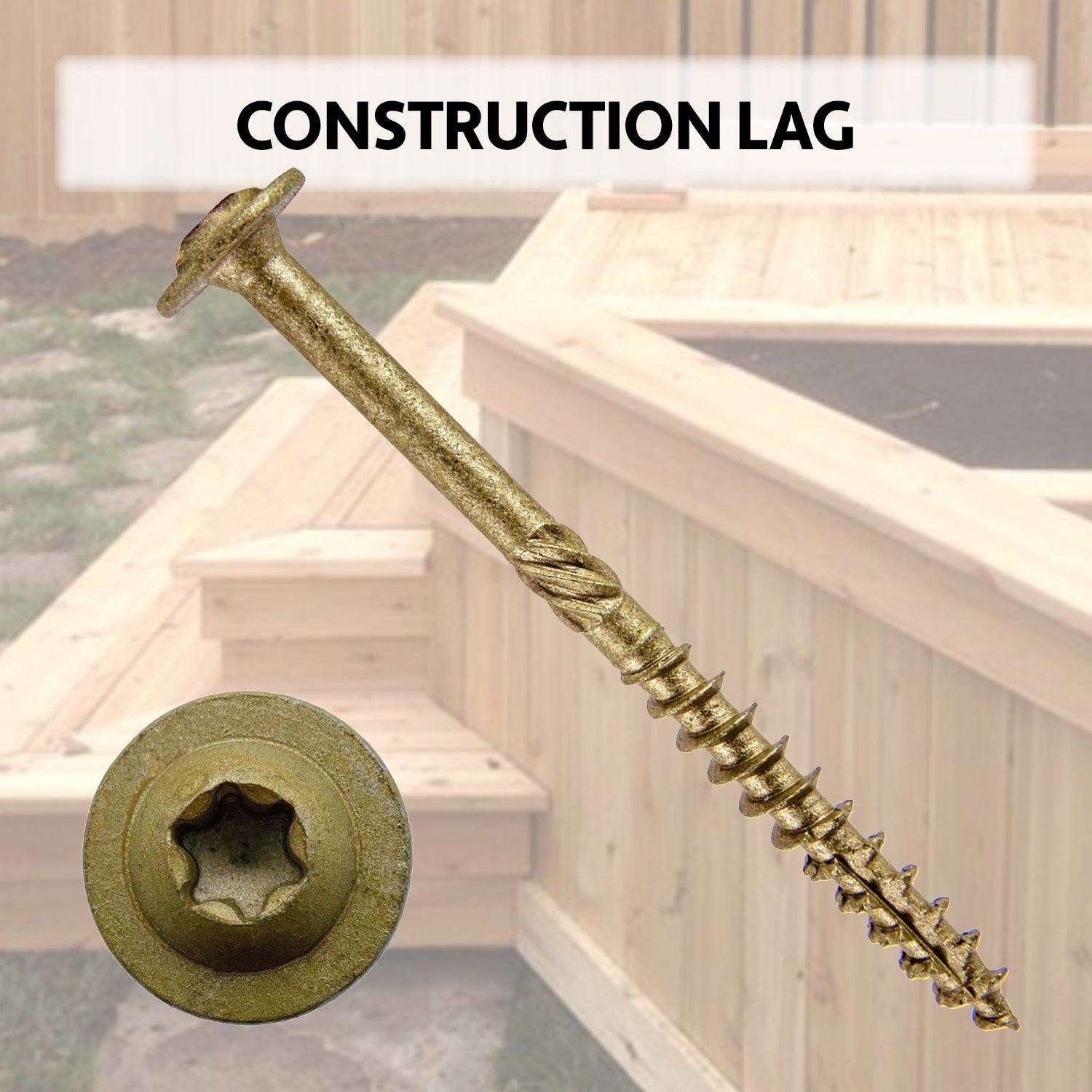
Construction lag screws are designed for structural building applications where torque capacity and holding strength are important for heavy-duty connections. Many construction screws feature aggressive coarse threads; sharp, notched points; and a Torx drive. Construction lag screws may be used for decking, fencing, roofing, framing, and more general construction purposes.

Composite Deck Screws
Composite deck screws are designed specifically for fastening composite deck boards without displacing material. Because standard wood screws may lift composite material and cause "mushrooming" on the deck surface, specialized screws help prevent uneven and unattractive connections. Composite deck screws typically have a corrosion-resistant coating to resist breakdown from weather exposure.

Trim Head Screws
Trim head screws have a smaller head than standard wood screws, making them valuable for semi-hidden connections. They are commonly used for wood trim, cabinetry, finish carpentry, siding, and other applications where a smaller screw head is preferred. Trim head screws are useful when you want to minimize the appearance of a fastener but need more holding power than finish nails offer.
The Best Wood Screw for Common Projects
The best wood screw depends on the materials you're fastening and the conditions the finished project will face. The chart below outlines recommended wood screw styles for common construction projects.
| Project | Recommended Screw | Important Considerations |
|
Hardwood |
Wood or construction screw | Predrill when appropriate; choose a sharp point and suitable thread |
| Trim | Trim head wood screw | Use putty to cover fastener heads on visible surfaces |
| Decking | Exterior deck screw | Match fasteners to deck board material |
| Construction | Lag screw or standard wood screw | Choose based on material and strength requirements |
| Timber & Beam | Structural wood screws | Screws should be 1.5-2x longer than the material you're fastening |
| Framing | Structural or framing screw | Framing nails are often preferred for fast installation speed |
| Drywall | Drywall-specific screw | Use coarse thread for soft woods and fine thread for hard woods |
| Wood-to-Metal | Self-drilling or Reamer Tek screw | Use fine thread screws for metal connections |
Best Wood Screws for Hardwood
Hardwoods like oak, maple, and other dense species can be more difficult to fasten than softer woods. Consider a screw with a sharp point and finer threads. Predrilling a pilot hole can reduce driving resistance and help prevent hardwood from splitting.
Best Wood Screws for Construction
For general lightweight construction, standard flat head wood screws offer excellent versatility and easy installation. For heavy-duty connections, use screws specifically engineered for structural fastening, such as structural lag screws or black log screws. Choose the right screw based on materials, required strength, and environment. For exterior construction, use an exterior-rated screw with appropriate corrosion resistance.
Get the Right Screw for Your Project
Choosing the right wood screw starts with identifying the application needs. Consider:
- What materials are you fastening?
- How thick are the materials?
- Is the project indoors or outdoors?
- Is the wood chemically treated?
- How much holding power is required?
- Does the screw need to be hidden or sit flush?
When you know the answers to each of these questions, selecting the right screw becomes much easier. At JakeSales.com, you can find specialty wood screws and general construction fasteners for woodworking, construction, decking, framing, and exterior projects. Choose the right screw designed for your application to make installation easier and create a durable connection.
FAQ
What is the difference between a wood screw and a regular screw?
Wood screws are specifically designed to grip wood fibers and create a strong connection in wood. They often have a sharp point and threads suited for wood.
What size wood screw should I use?
The correct screw size depends on the thickness of the materials being joined, the type of wood, and the required holding power. In general, screw length should be about 1.5-2 times longer than the top board.
Should I predrill holes for wood screws?
Predrilling is not always necessary, but it can make installation easier and help prevent splitting. It is particularly useful when working with hardwood, narrow pieces of wood, or when installing screws close to an edge.
What type of screw is best for hardwood?
A sharp-pointed wood or construction screw with a thread design appropriate for dense wood is generally a good choice for hardwood. Predrilling a pilot hole can reduce driving resistance and help prevent splitting, especially near edges.
What type of screw should I use for wood framing?
For general, non-structural framework, an appropriately sized construction screw is often suitable. For load-bearing or structural connections, use a structural wood screw specifically rated for the application rather than a general-purpose wood screw.